In this article
If you lie awake at night, the room itself might be working against you. Bright light, clutter, and a too-warm bed all tell your brain to stay alert.
These seven ideas make your bedroom darker, calmer, and warmer in the right places, so sleep comes easier.
This post contains affiliate links. If you buy through them, I may earn a commission at no extra cost to you.
1. Black Out the Light
Even small light leaks — a hallway glow, a streetlamp — can wake you up without you noticing. Blackout curtains on a tension rod, plus a simple sleep mask for travel or bright mornings, fix it fast. Keep the room as dark as you can, and charge your phone outside the bedroom if its screen lights up.
- Blackout curtains, tension rod
- Sleep mask for bright mornings
- Phone charging outside the room
2. Keep the Room Cool, the Bed Warm
Most people sleep best in a cool room with a warm bed. Open a window or lower the heat a little, then layer a light duvet with a heavier throw you can kick off. Flannel sheets in winter and cotton in summer keep the bed comfortable without overheating.
- Cool room, warm layers
- Light duvet plus a throw
- Flannel in winter, cotton in summer
3. Use Warm, Low Light at Night
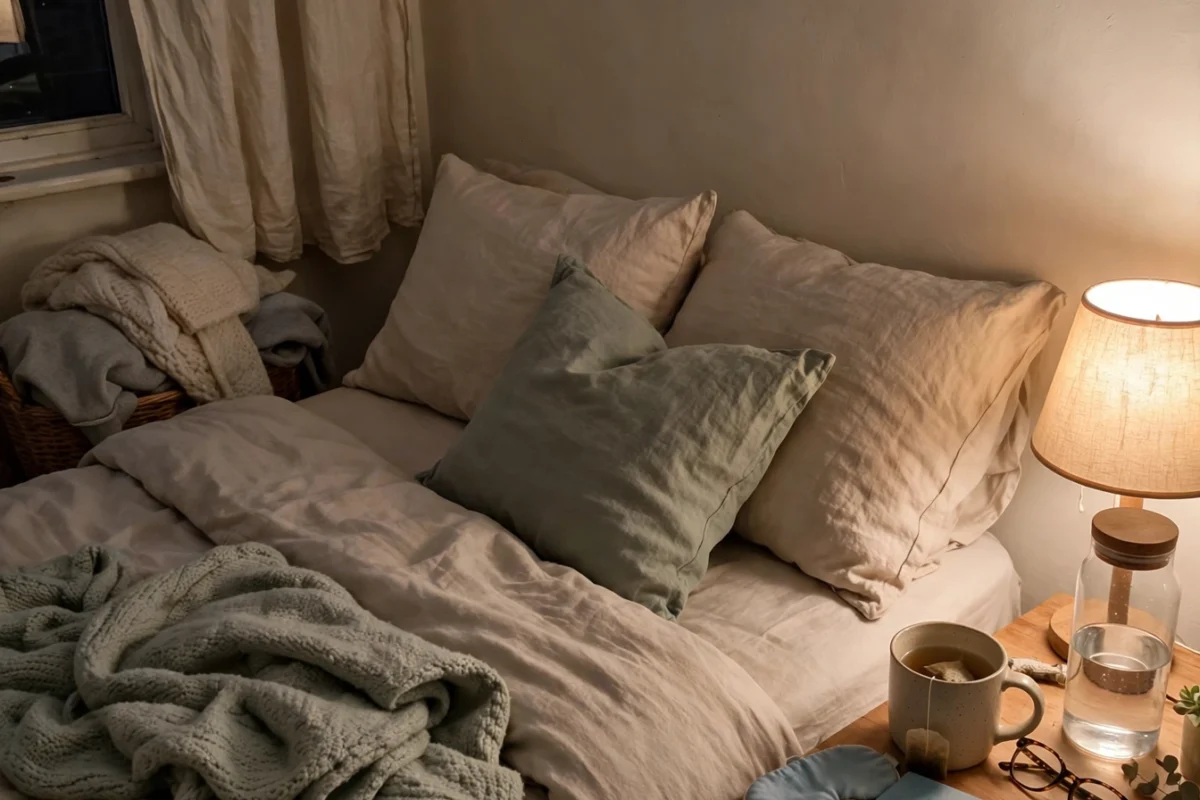
Bright white bulbs in the evening delay sleep. Swap bedside bulbs for warm, dim ones, and use a small lamp instead of the ceiling light after dinner. A salt lamp or a dim amber light gives the room a calm glow that helps you wind down.
- Warm, dim bedside bulbs
- Lamp, not ceiling light, after dinner
- Amber glow for winding down
4. Make the Bed Every Morning
A made bed invites you back at night and makes the whole room look tidy in seconds. Smooth the duvet, fluff the pillows, and fold a throw across the foot. It is a tiny habit, but it turns the bed into a place you want to sleep in, not a pile of bedding.
- Smooth duvet, fluff pillows
- Throw folded across the foot
- Takes under two minutes
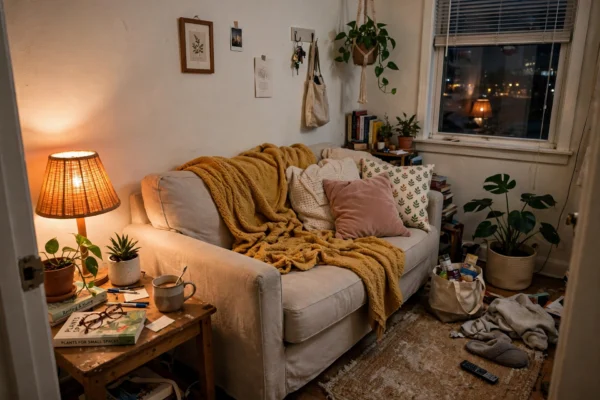
For a cozy living room to match, see 7 Cozy Small Living Room Ideas for Renters — the same warm layering, applied to your main room.
5. Clear the Surfaces
Nightstands covered in chargers, books, and bottles keep your brain busy. Keep only three things beside the bed: water, a book, and a lamp. Everything else goes in a drawer or a basket. A clear surface means a clearer head when you lie down.
- Only water, book, lamp on the nightstand
- Everything else in a drawer
- One basket for odds and ends
6. Add a Calm Scent
Lavender, cedar, or plain clean cotton scent tells your brain it is bedtime. A pillow spray, a small diffuser, or a sachet in the drawer is enough — do not overdo it. Use the same scent every night so it becomes a sleep cue over time.
- Pillow spray or diffuser
- Lavender, cedar, or cotton
- Same scent nightly, as a cue
7. Ban Screens an Hour Before Bed
Scrolling in bed is the fastest way to stay awake. Put the phone on charge outside the room, read a paper book, or listen to calm music instead. If you must use a screen, turn brightness all the way down and use a warm night filter.
- Phone outside the bedroom
- Paper book instead of scrolling
- Night filter if a screen is unavoidable
HOW TO USE THIS LIST
Start tonight with darkness, cool air, and no phone in bed. Add the other ideas one by one over the week. Sleep improves with routine, not with one perfect purchase.
KEEP READING
- 7 Cozy Small Living Room Ideas for Renters
- 7 Small Kitchen Storage Ideas That Actually Work
FAQ
Q: What is the best bedroom temperature for sleep?
A: Most adults sleep best around 18–20°C (65–68°F) with warm bedding. If you wake up sweaty, the room is too warm, not the duvet too thin.
Q: Do blackout curtains really help?
A: Yes, especially if streetlights or early sun wake you. Darkness supports melatonin, the hormone that signals sleep.
Q: How long before bed should I stop screens?
A: An hour is ideal. If that feels impossible, start with 30 minutes and a warm night filter.